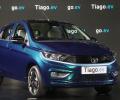
Tata Motors, the market leader in electric four-wheeler space, has sought incentives for its Tiago EV under the government's production-linked incentive (PLI) scheme, group chief financial officer P B Balaji said on Tuesday. The Mumbai-headquartered firm has applied for all variants of the Tiago, which recently hit a sales milestone of 10,000 units. "The Automotive Research Association of India certification is done.
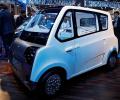
The EV industry is at an inflection point and batteries will play a critical role ahead -- batteries and related components typically constitute 35-45 per cent of an EV's costs.

You can ask for written communication from your HR manager seeking an explanation about your resignation. Please mark the copies to your senior authorities as well as top executives especially if you feel you are being harassed, suggests rediffGURU Pradeep Pramanik.

The country saw a massive year-on-year surge in the demand for electric vehicles, with retail sales of electric two-wheelers rising by 58 per cent, passenger vehicles by 130 per cent, three-wheelers by 82 per cent, and commercial vehicles by 171 per cent in March 2023, according to the data shared by the Federation of Automobile Dealers Associations (Fada). According to a report by JMK Research, the EV segment as a whole grew by 157 per cent during FY23, to 1,180,597 units, from 458,746 units a year ago. Overall, EV sales in March 2023 rose by 82 per cent from the March 2022 figure, the JMK report added.

The Mahindra's Scorpio-N becomes the first body-on-frame chassis SUV to secure a five-star Global NCAP rating.

Utility vehicles manufacturer Mahindra & Mahindra will replace Hero Honda in the country's benchmark index Sensex from July 9.

The lockdown in Maharashtra will have a catastrophic impact on April sales, as dealers will not be able to realise the potential of festivities like Ugadi, Gudi Padwa, Baisakhi and Poila Boishakh.

Promoted by conglomerate Mahindra & Mahindra, Autoinspekt, a cloud-based vehicle inspection platform, is fast emerging as a critical tool for used car buyers and sellers.

The government is working on a recall policy.

Maruti will showcase its first concept electric vehicle, the e-SURVIVOR; M&M it's six new EVs, including two futuristic concepts

France-based automobile manufacturer Renault and Japan-headquartered Nissan on Monday committed investments of $600 million (around Rs 5,300 crore) in the country 15 years after foraying into the Tamil Nadu automobile industry. The fresh round of investments would witness roll out of six new models between the two companies including -- two electric vehicles -- representing the two global brands, Nissan Global chief operating officer and Member, Alliance Board Ashwani Gupta said in Chennai.
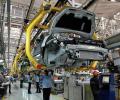
Automobile manufacturers are likely to report strong numbers for the September quarter of Financial Year 2023-24 (Q2 FY24), riding on growth across segments and offset by a marginal drop in overall two-wheeler (2W) volumes. Higher average selling price (ASP) year-on-year (YoY), which was necessitated by price hikes taken by original equipment manufacturers (OEMs), and an improved product mix will also aid revenues and margins. Moreover, commodity prices are down on a YoY basis, leading to higher margins in earnings before interest, taxes, depreciation and amortisation (Ebitda).

Benchmark equity indices Sensex and Nifty closed higher on Friday after two days of fall, helped by buying in metal, telecom and auto stocks amid a firm trend in global markets. Automakers led by Maruti Suzuki India, Hyundai, Mahindra & Mahindra reporting robust wholesales of passenger vehicles and GST collections crossing Rs 1.50 lakh crore for the third straight month in May also added to the optimism. The 30-share BSE Sensex climbed 118.57 points or 0.19 per cent to settle at 62,547.11.

Passenger vehicle sales in India touched a record high of 41.08 lakh units in 2023, growing by 8.3 per cent over the previous year driven by SUVs, which accounted for almost half of the total dispatches from manufacturers to dealers. The record sales have been achieved despite an increase in the average price of vehicles to Rs 11.5 lakh last year as compared to Rs 10.58 lakh in 2022. Market leader Maruti Suzuki, Hyundai Motor India, Tata Motors and Toyota Kirloskar Motor reported their best-ever annual sales in 2023.

From selling 14,000 Jeeps in 1973, we slipped to selling just 7,000 vehicles within just three-and-a-half years by 1976.
Hindustan Motors Limited of C K Birla group will launch multi-utility vehicle manufactured at its Uttarpara plant in the state.

Ministries such as road transport and heavy industries are learnt to have objected to NITI Aayog's attempts to become an implementing body for the EV programme.

Sun Pharma emerged as the biggest gainer from the Sensex pack, climbing 2.09 per cent, followed by ITC, Titan, Bajaj Finance, Nestle, Infosys, L&T, JSW Steel, Reliance Industries and Kotak Mahindra Bank. UltraTech Cement, Maruti, HDFC Bank, Wipro, State Bank of India and NTPC were among the laggards.

The investment will be made through a joint venture with Toshiba and Denso. The battery is the most expensive single part of an EV.

India is sceptical that Tesla might import into the country cars made in China. Tesla executives were in India last month and appear to have proposed a factory in the country. But do not be surprised if that does not happen in a hurry.

Apart from a pavilion of vintage cars, there will be a Bollywood corner

Even as India's passenger-vehicle sales touched a record high of 3.9 million units in 2022-23, growing 27 per cent over the previous financial year, the country's largest carmaker, Maruti Suzuki India (MSIL), said on Monday uncertainties in the electronic-component supplies might affect production in FY24. MSIL said the shortage of electronic components had some impact on production in FY23. "The company took all possible measures to minimise the impact.
Maruti recorded a 13.12% year-on-year surge in average revenue earned per car in 2023 compared to M&M's 7.56%, Hyundai's 6.76% and Tata Motors' 1.88%.

Demand for passenger vehicles has been driven by new models, especially in the SUV category with the likes of Maruti Vitara Brezza and Hyundai Creta clocking good numbers

Maruti Suzuki India (MSIL) - the market leader in small cars - is eyeing the top spot in the sports utility vehicle (SUV) segment within a year - with a 33 per cent share of the pie. The company has been selling two SUVs - the Brezza and the Grand Vitara - and will start deliveries of the Jimny and the Fronx from March-end, and has set a target of growing its share from the current 11.5 per cent of the SUV market to 33 per cent by the end of 2023-24. The SUV segment is roughly about 42 per cent of the total passenger vehicle market, or around 1.3 million units.
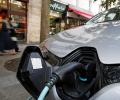
Automobile manufacturers, new and old, as well as ancillary suppliers are set to spend a combined Rs 70,630 crore over the next five years on either entering the electric vehicle segment or stepping up their presence in it. Data culled from announcements made by firms shows India, the world's fifth largest automobile market, is poised to receive one of the biggest capex pushes ever to fuel the transition from internal combustion engines to electric motors and batteries as part of a green drive. The EV push, egged on by the government's emphasis on electric mobility to meet its net zero targets, is expected to yield at least 25 electric vehicles - new ones as well as electrified versions of existing vehicles running on internal combustion engines.

Consumer stocks remain the biggest laggard on the bourses. The Nify50 weighting of FMCG stocks declined to a decade low of 9.9 per cent at the end of March this year, down 150 basis points from 11.4 per cent a year ago. At their peak in March 2013, major FMCG stocks, such as Hindustan Unilever, ITC, and Asian Paints, together accounted for 15 per cent of the Nifty50. But now together with automobile stocks, the consumer goods sector accounts for only 14.7 per cent of the index, down 200 basis points in the past 12 months and 37 per cent from the record high weighting of 23.4 per cent at the end of March 2014.

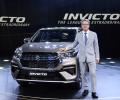
Maruti Suzuki is set to launch a new multi-purpose vehicle (MPV) -- Invicto -- next month. It will be the company's first passenger vehicle with an ex-showroom price tag of Rs 20 lakh or more, said Shashank Srivastava, executive director (sales), on Tuesday. The upcoming MPV will compete with the likes of Toyota Innova Hycross, Kia Carnival, Hyundai Alcazar, MG Hector Plus, Tata Safari, Mahindra & Mahindra XUV700, and Mahindra & Mahindra Scorpio-N - all having three rows of seats. Invicto will be based on the Hycross by Toyota, which will manufacture Maruti's most expensive car at its Bidadi plant in Karnataka.

Ola Electric, India's largest maker of electric scooters, launched its most affordable ride on Tuesday, in an attempt to woo more customers and expand its electric two-wheeler lineup.
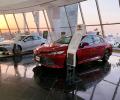
The growth momentum that started during the festival season is likely to sustain in the new year, reports Arindam Majumder.

The auto component sector grew at 5-6 per cent last year against a 13 per cent growth in 2012.
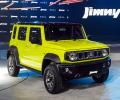
Jimny will be priced between Rs 12.7 lakh and Rs 15.05 lakh.

Only five of India's top 20 car models have seen a reduction in wait times over the past year.

RIL subsidiary Reliance New Energy Solar, Ola Electric, Hyundai Global Motors Company and Rajesh Exports have been approved for receiving incentives under the Rs 18,100 crore Production Linked Incentive (PLI) scheme for battery manufacturing in India, sources said on Thursday. "The ministry had received bids from 10 companies with a capacity of 130 GWh. Reliance, Ola Electric, Hyundai and Rajesh Exports have qualified for ACC batteries," a source said. Other companies which had applied for the PLI scheme for Advanced Chemistry Cell (ACC) batteries were Lucas-TVS, Mahindra & Mahindra, Amara Raja Batteries, Exide Industries, Larsen & Toubro and India Power Corporation Limited.

Even as domestic passenger car sales declined 29.4 per cent between April and August this year, exports grew 6.5 per cent, partially cushioning the blow from slowing sales.

The impact of the ban will not be limited to sales.

Open order books in February breach 700,000; wait period for some models exceed a year.
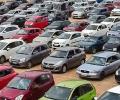
Passenger and commercial vehicle prices are expected to rise as automobile companies invest in upgrading vehicles to meet stricter emission norms that kick in from April next year. The Indian automobile industry is currently working to make their products meet the second phase of Bharat Stage VI, equivalent to Euro-VI emission norms, in real time driving conditions. Four-wheeler passenger and commercial vehicles will need more sophisticated equipment to be added to meet the next level of emission standards.
Automakers Maruti Suzuki, Tata Motors, Mahindra & Mahindra and Kia reported robust growth in their vehicle dispatches in the domestic market for August buoyed by festive demand and easing of semiconductor shortage woes. Other manufacturers like Hyundai, Toyota and Skoda also reported growth in wholesales in August as compared with the same month last year. The country's largest automaker Maruti Suzuki India said its domestic passenger vehicle dispatches increased by 30 per cent to 134,166 units in August as compared with 103,187 units in the year-ago month.
